
Fire Damage Restoration Services play a pivotal role in eliminating stubborn smoke and soot odors that linger long after a blaze has been extinguished. In the aftermath of a fire, the microscopic particles carried in the smoke embed themselves deep within porous materials, releasing pungent odors over time. Skilled practitioners employ a combination of specialized equipment, advanced chemical agents, and methodical cleaning protocols to neutralize these offensive smells rather than simply masking them. This guide explores how experts dissect the problem, deploy targeted solutions like thermal fogging and odor neutralization, and restore a property to a safe, fresh state.
How do professionals clean smoke damage and eliminate odors?
When a restoration team arrives, they first conduct a comprehensive assessment of the affected area, mapping out every zone of visible soot and concealed smoke infiltration. They inspect drywall, wooden beams, carpeting, upholstered furniture, and HVAC systems, checking for discoloration and residual oily films. Infrared cameras may be used to detect hidden smoldering spots or heat-affected areas that continue to off-gas odor-causing compounds. By combining visual inspection with infrared scanning, experts ensure that no pocket of smoke residue escapes attention.
After identifying the scope of contamination, technicians don personal protective equipment (PPE) including respirators, gloves, and protective suits to safeguard against respiratory irritants and carcinogenic particles. They establish containment barriers—using polyethylene sheeting and negative air machines—to prevent cross-contamination between burned and unaffected zones. Negative air machines with HEPA filters create a depression that draws airborne soot out of the structure and through high-efficiency particulate air traps, effectively scrubbing the environment of loose soot particles before wet or dry cleaning begins.
The cleaning sequence typically starts from the top down to minimize re-soiling of surfaces. Ceilings and high walls receive dry cleaning with chemical sponges to lift loose soot, followed by detergent-based wiping or specialty solvents designed for different substrates. Cabinet interiors, door frames, and window sills are methodically cleaned to prevent reintroduction of odor during later stages. This meticulous attention to detail ensures that foundational surfaces are free of particulate matter before advanced odor removal methods are applied.
In parallel, HVAC ductwork is thoroughly inspected and cleaned. Soot that migrates into air handling units and duct linings can continue circulating smoky odors long after visible fire damage is addressed. Technicians use rotary brushes or pneumatic duct cleaning tools to dislodge entrenched soot, then employ high-powered vacuums to extract debris. Finally, registered antimicrobial agents are applied to inhibit mold growth in areas that might have become damp during firefighting efforts.
What is the science behind smoke odor and soot infiltration?
Smoke is composed of complex gases, sub-micron particles, and volatile organic compounds (VOCs) that readily adhere to surfaces and penetrate porous materials such as drywall, fabrics, and insulation. Heat from the fire causes pores to expand, allowing soot and VOCs to lodge deep within fibers and microscopic voids. As these pockets cool, the materials contract around the contaminants, trapping odor compounds that later off-gas whenever temperature or humidity changes. Understanding this adsorption-desorption cycle is essential to designing treatments that can reach beyond surface residues.
Soot consists of carbonaceous particles generated by incomplete combustion. It is often oily or tar-like, which causes it to cling tenaciously to surfaces and embed in textures. The oily nature also makes soot hydrophobic, so water alone cannot remove it effectively. Instead, emulsifying agents or dry-cleaning solvents are required to dissolve these oils and detach soot from the substrate. For deep-set soot, mechanical agitation paired with specialty cleaning chemicals breaks the bond between soot and the surface.
Odor molecules in smoke include low-molecular-weight aldehydes, ketones, and organic acids. These compounds have high volatility and low odor thresholds, meaning even trace amounts can produce noticeable smells. Controlling these odors demands more than masking fragrances; it requires chemical alteration or destruction of odor molecules through oxidation, encapsulation, or catalytic conversion. Technologies such as ozone generators, hydroxyl radicals, thermal fogging, and molecular sequestration each approach the task with unique mechanisms to neutralize or capture odorous compounds.
Additionally, smoke damage often contains hazardous components like polycyclic aromatic hydrocarbons (PAHs) and acid gases that pose health risks. Restoration technicians must be well-versed in the chemistry and toxicity of these substances to select the appropriate PPE and disposal methods. Proper handling prevents secondary contamination and safeguards occupants and workers alike.
Why hire professional Fire Damage Restoration Services for smoke and soot odor removal?
Fire Damage Restoration Services deliver targeted expertise that goes beyond basic cleaning to address the chemical and structural challenges posed by smoke and soot. Professionals are trained to evaluate the chemistry of the combustion byproducts and choose the correct blend of oxidizing agents, encapsulating polymers, and adsorbents to neutralize odors at a molecular level. This scientific approach ensures that smoky smells do not rebound weeks or months later.
Restoration experts use industry-approved equipment, such as industrial-grade air movers, dehumidifiers, and negative air machines equipped with HEPA filtration, to control airborne particulates and moisture. Their methodologies adhere to guidelines set by organizations like the Institute of Inspection, Cleaning and Restoration Certification (IICRC). Compliance with these standards guarantees that the property is restored safely and thoroughly, reducing liability risks and protecting occupant health.
Moreover, professionals coordinate with insurance adjusters to document damages and remediation steps, streamlining claims processes and ensuring proper reimbursement for homeowners or commercial property owners. Their detailed reports include moisture readings, pre- and post-restoration photos, and equipment tracking logs, which serve as objective evidence of work completed. This transparency is invaluable when validating approaches such as ozone treatment or thermal fogging in the context of a claim.
Midway through a complex restoration project, clients often need prompt answers about scheduling, costs, and scope changes. A dedicated project manager serves as a point of contact, providing status updates, clarifying next steps, and offering guidance on post-restoration maintenance. This client-centric communication model fosters trust and minimizes downtime, ensuring that both residential and commercial properties return to normal use as quickly as possible.
What techniques and technologies are used for smoke odor removal?
Professionals leverage a combination of mechanical, chemical, and thermal methods to eradicate smoke odors rather than mask them. Initial mechanical cleaning involves HEPA vacuuming and dry cleaning sponges to remove loose soot and particulate matter. Technicians then apply specialized detergents or emulsifiers to dissolve oily residues. After surface cleaning, advanced odor removal modalities like thermal fogging come into play, penetrating porous structures and neutralizing odor molecules at the source.
Thermal fogging uses a fogging machine to vaporize a deodorizing solution into heated particles that mimic smoke. These microscopic droplets disperse throughout the property, infiltrating cracks, upholstery, and hidden cavities. Upon contact, the odor-neutralizing agents bond to or chemically alter the odor molecules, rendering them scentless. Since thermal fog mimics the behavior of smoke, it reaches areas traditional cleaning cannot, delivering comprehensive coverage.
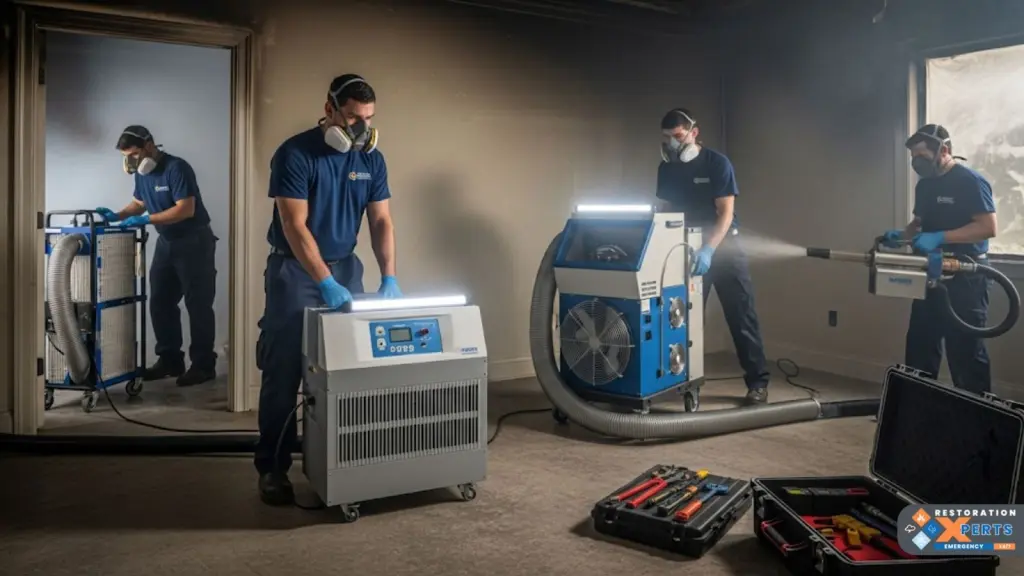
Ozone treatment is another powerful tool for odor neutralization. Ozone generators produce O₃ molecules that oxidize odor compounds on contact. Though ozone must be used in unoccupied spaces due to health concerns, its fast-acting oxidation makes it ideal for aggressive odor challenges. After an ozone cycle, technicians ventilate the building thoroughly to ensure all residual ozone dissipates before re-entry.
Hydroxyl generators offer a safer alternative for occupied homes and office buildings. They generate hydroxyl radicals (·OH) that oxidize VOCs and odor molecules without harmful byproducts. These units can run continuously in the background, maintaining a neutral environment even in high-traffic areas. Their versatility and safety profile make hydroxyl generators a mainstay in many restoration projects.
Specialty adsorbents such as activated charcoal and zeolite can be placed in treated areas to capture residual odors through physical adsorption. Enzyme-based sprays and molecular encapsulators may also be used as a final step, creating a barrier that locks in any remaining scent molecules. For the deepest pockets of odor, technicians sometimes inject deodorizing gels into wall cavities or utilize cellulose-based injectors that slowly release neutralizers over time.
In one complex commercial restoration, professionals combined four methods—HEPA vacuuming, thermal fogging, ozone treatment, and activated charcoal traps—to eradicate smoke odors from thousands of square feet of open-plan office space. The integrated approach shortened the timeline by 30 percent and resulted in zero odor rebound even six months after project completion.
If property owners want to schedule a detailed assessment or learn more about effective odor control systems, they can always Contact us for a personalized consultation and transparent estimate.
Comparative Table of Advanced Smoke Odor Removal Methods
| Method | Mechanism | Occupied Space? | Advantages |
|---|---|---|---|
| Thermal Fogging | Heated deodorant vaporizes into microdroplets to reach deep into pores | No | Penetrates hidden cavities, replicates smoke behavior |
| Ozone Treatment | O₃ oxidizes odor molecules | No | Rapid oxidation, broad-spectrum odor removal |
| Hydroxyl Generators | ·OH radicals oxidize VOCs | Yes | Safe for occupancy, continuous use |
| Activated Charcoal | Physical adsorption | Yes | Non-toxic, passive, long-term adsorption |
| Enzyme Sprays | Biochemical breakdown of odor compounds | Yes | Eco-friendly, target-specific |
How do professionals approach odor neutralization step by step?
A structured workflow begins with a tailored project plan that outlines each stage, timelining equipment deployment, and specifying required chemical agents. After the initial assessment and containment setup, technicians remove all salvageable items and transport them to an off-site cleaning facility if needed. This pre-treatment inventory reduces the load within the structure and allows delicate items to receive focused attention.
Next, the team tackles surface cleaning and soot removal. They use colorimetric wipes and moisture meters to verify that residue levels have returned to safe thresholds. This empirical approach guides them in choosing which areas require additional cleaning passes or thicker concentrations of emulsifiers. By quantifying results, technicians can demonstrate progress and adjust methods in real time.
Once surfaces are visibly clean, targeted odor removal technologies are staged. Air scrubbing units draw air through HEPA and activated carbon filters, reducing particulates and adsorbing odor compounds. If thermal fogging is selected, technicians seal off the treatment area and run the fogger until sensor-monitored droplet concentrations reach optimal levels. After a dwell period, the space is ventilated and scrubbers continue to cycle the air until readings indicate normal air quality.
In the final deodorization phase, portable hydroxyl generators or enzyme sprays may be deployed in living spaces, upholstered furniture zones, and carpeted areas. These systems operate over several hours or days, gradually neutralizing any residual odor molecules. Technicians periodically sample air and surfaces, comparing to pre-treatment baselines to confirm complete odor eradication. With all steps verified, restoration professionals conduct a final walkthrough with the property owner to ensure satisfaction and answer any lingering questions.
How can property owners maintain odor neutrality after restoration?
After professional remediation, maintaining a fresh, odor-free environment requires proactive ventilation and humidity control. Installing programmable thermostats that cycle fresh air exchange can prevent trapped odors from reemerging. Regularly changing HVAC filters—especially high-efficiency models—ensures that airborne particulates and residual odor-causing molecules are continually removed during normal operation.
Routine cleaning of soft surfaces with pH-neutral detergents and scheduled vacuuming with HEPA-equipped vacuums helps keep porous materials from re-adsorbing VOCs. Property owners should also monitor for new sources of off-gassing, such as newly painted walls or furniture off-gassing formaldehyde, which can mimic smoke odors. Placing small sachets of activated charcoal in closets and cabinets serves as a passive, ongoing deodorization measure.
For long-term peace of mind, some clients opt for annual or semi-annual maintenance visits by trained technicians. These visits include rapid air quality assessments using portable gas detection equipment and inspection of odor control hardware. If any odor drift is detected, a light application of enzyme sprays or a brief hydroxyl pass can restore neutrality without a full remediation cycle. Implementing this preventive strategy extends the value of the initial professional Smoke Odor Removal treatment.
What to expect after completing professional smoke odor removal?
Upon project completion, clients typically experience a dramatically improved indoor air environment. Odors that once pervaded every room become undetectable, even in high-humidity conditions or near porous materials that previously held scents. Furniture, drapes, and carpets feel softer and smell fresh, improving occupant comfort and well-being.
Restoration teams provide a detailed post-restoration report that includes before-and-after readings for particulate counts, VOC levels, and ozone or hydroxyl residuals. This documentation serves as evidence of compliance with indoor air quality standards and can be invaluable when selling or leasing the property. Clients also receive recommendations for any follow-up actions, such as recommended filter change intervals or tips for spot-treating minor odors.
Finally, restoration professionals often offer warranties or satisfaction guarantees for their work, standing by the quality of their smoke odor removal services. If any scent reemerges within a defined period, technicians return at no additional charge to address the issue. This commitment to long-term performance underscores the value of hiring a reputable provider rather than attempting DIY fixes.
How long does smoke odor removal take?
The duration of a professional odor removal project depends on the fire size, building materials, and chosen remediation methods. Small residential jobs may require two to three days, including assessment, cleaning, advanced odor neutralization, and verification testing. Larger commercial properties can take a week or more, particularly if multiple cycles of ozone or thermal fogging are necessary.
Factors such as high humidity or extreme outdoor temperatures can extend project timelines, as equipment like dehumidifiers and air scrubbing units need extra runtime to achieve desired conditions. Rapid mobilization of equipment and technicians can mitigate delays, which is why many restoration companies maintain pre-positioned fleets of air movers, hydroxyl generators, and foggers. Clear communication of project milestones keeps clients informed about any schedule adjustments.
Cost considerations for smoke and soot odor removal services
Pricing for smoke odor removal typically includes labor, equipment rental, chemical agents, waste disposal fees, and project management. Basic surface cleaning and HEPA vacuuming may begin at several hundred dollars for a small home, while advanced treatments like ozone and thermal fogging can add a few thousand dollars depending on square footage. Bulk pricing and bundled packages often reduce per-unit costs for larger properties.
Insurance coverage frequently applies to restoration work when damage results from an accidental fire or covered peril. Restoration professionals assist in providing itemized estimates, damage documentation, and remediation plans to expedite claim approvals. Clear delineation between covered services (e.g., soot cleaning, deodorization) and non-covered items (e.g., routine maintenance) prevents misunderstandings and ensures a smooth reimbursement process.
Why is proper ventilation and HVAC cleaning essential?
Even after surface cleaning and odor neutralization, untreated HVAC systems can reintroduce smoke odors throughout a property. Soot particles lodged in ductwork or blower compartments can off-gas as temperature and humidity fluctuate. Comprehensive HVAC cleaning—using rotary brushes, compressed air, and HEPA vacuums—removes these entrenched contaminants.
Post-cleaning air balance tests confirm that airflow and filtration meet or exceed industry standards. Technicians may install UV-C light modules within duct runs to inhibit microbial growth, further improving air quality. Maintaining clean, well-balanced HVAC systems is the cornerstone of sustaining the results of professional smoke odor removal services.
Conclusion
Fire Damage Restoration Services demand a convergence of science, specialized equipment, and meticulous project management to rid properties of persistent smoke and soot odors. From initial assessments and mechanical cleaning to advanced methods like thermal fogging, ozone treatment, and hydroxyl radical generation, each step targets odors at the molecular level. Clients benefit from documented processes, compliance with industry standards, and transparent communication throughout every phase of the restoration.
Property owners seeking a reliable partner for post-fire odor challenges can turn to Restoration Xperts for comprehensive remediation solutions backed by satisfaction guarantees and insurance support. Whether it’s a small residential cleanup or a large commercial recovery, professional intervention delivers lasting results, restores indoor air quality, and safeguards occupant health. To begin the journey toward a fresh, safe environment, don’t hesitate to Contact us for an expert consultation.
FAQs about professional smoke and soot odor removal
How do you clean smoke damage?
When cleaning smoke damage, technicians differentiate between surface soot and sub-surface odor compounds. They start with HEPA vacuuming and dry cleaning sponges to remove loose particulates, followed by emulsifying agents that dissolve oily residues. Advanced methods like thermal fogging or hydroxyl radical treatment then neutralize odor molecules at a molecular level.
Why does my house smell smoky after a fire has been extinguished?
Smoke particles carry volatile organic compounds that adhere to porous materials such as drywall, fabrics, and insulation. As these materials expand and contract with temperature and humidity changes, they release trapped odor molecules, causing the smoky smell to persist.
Is there a difference between smoke and soot?
Yes. Smoke consists of the gaseous byproducts of combustion, while soot is the fine, carbonaceous particulate matter formed when organic materials burn incompletely. Soot is responsible for the visible black residue and is often the primary carrier of smoky odors.
How long does it typically take to remove smoke odor from a property?
For a small residential property, the average timeline is two to three days for complete remediation, including assessment, cleaning, advanced odor treatments, and verification testing. Larger or more complex sites may require up to a week or longer, depending on environmental conditions and the need for repeated treatments.
Can smoke odors return after professional treatment?
When properly performed by certified professionals, advanced odor neutralization methods combined with HVAC cleaning and post-treatment verification virtually eliminate odor rebound. Many companies offer warranties or follow-up visits to address any residual smells, ensuring long-term satisfaction.


